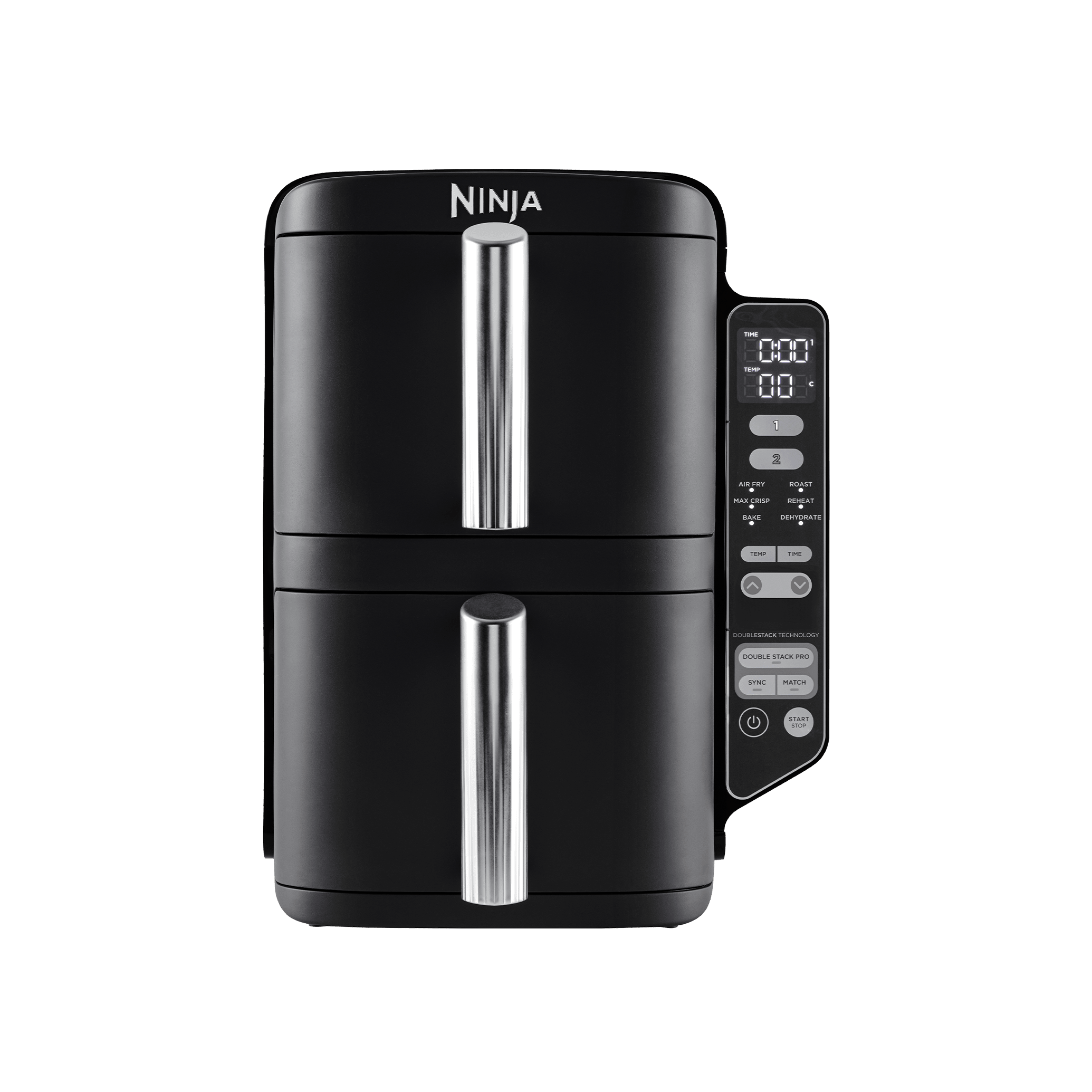
Ninja SL300EU Review: A 7.6L Double-Stack Air Fryer That Trades Width for Vertical Speed

Ninja SL300EU air fryer review
Ninja SL300EU — hero image


Ninja SL300EU Review: A 7.6L Double-Stack Air Fryer That Trades Width for Vertical Speed

If you’re shopping the Ninja SL300EU, you’re not looking for a gimmick—you’re looking for a repeatable way to get crisp textures, faster weeknight timing, and fewer “is it done yet?” moments. This review focuses on what the model is built to do well, where its edges are, and how to cook with it confidently.

Quick comparison

Open 2–3 listings and compare the same criteria (variants, returns, reviews).

Quick Verdict

Who it’s for

  • Households that regularly cook a main + side at different temperatures
  • Meal-preppers who like running two smaller batches instead of one crowded basket
  • Anyone who wants crisp results without turning on a full-size oven

Who it’s not for

  • Cooks who mainly do one large tray of a single dish (a big single-basket model can be simpler)
  • Tiny kitchens with very low cabinet clearance (stacked models are tall)
  • People who want toast, bagels, and open-tray baking as a primary use

Verified Specs Table

Only specs that are explicitly stated in the manufacturer documentation and reputable listings are included here. If something isn’t clearly verified, it’s left out on purpose.

Capacity 7.6 L (2 × 3.8 L drawers)
Power 2470 W
Product dimensions 38.5 cm (H) × 28 cm (W) × 42 cm (D)
Weight 9.76 kg
Cooking functions Air Fry; Max Crisp; Roast; Bake; Dehydrate; Reheat

What Makes This Model Different

The SL300EU takes the Double Stack approach and scales it to a family-friendly size without turning into a countertop takeover. The drawers are stacked vertically, and the included racks make it possible to cook on multiple levels—useful when you want volume but don’t want to crowd.

Quick pick

Want the fastest next step? Open one solid option and verify the key details in seconds.

latest reviewscompatibility/size
Check on Amazon: Aigostar 30L Air Fryer Oven

What you give up is the wide, open access of a side-by-side layout. What you gain is a slimmer footprint and a workflow that suits “main + side” cooking.

Cooking Performance Deep Dive

Air-fryer performance is mostly physics: hot air movement, moisture management, and surface area. When food dries on the outside quickly, browning accelerates; when moisture is trapped, texture softens. The goal is to use the appliance’s strengths—fast airflow and compact heat—to create a crisp exterior while protecting the inside.

Best for… first-time buyers

If this sounds like you, start here and compare the details that matter to you.

Check on Amazon

Two-zone models shine when you treat them like a coordinated system. Put the slower, thicker item in one zone and the fast-crisping side in the other. If you’re cooking two different foods, keep sauces and glazes for the final minutes so sugars don’t over-darken while the other zone catches up.

With stacked drawers and racks, airflow becomes your friend when you respect it. Avoid stacking wet foods directly above each other. Instead, use the racks to separate items and rotate positions halfway through if one level is browning faster.

Next step

Open the listing, check compatibility/size + latest reviews, and you’ll know quickly if it fits your needs.

Check on Amazon

Cooking Time & Temperature Guide

Use this guide as a practical starting point. Exact results depend on thickness, how cold the food is, and how full the basket/tray is.

Food Temp Time Notes
Frozen fries 200°C / 390°F 12–20 min Shake at 1/2; finish hot for crunch.
Chicken wings 200°C / 390°F 18–28 min Dry well; turn once; sauce after.
Salmon fillet 190°C / 375°F 8–14 min Skin-side down first; glaze late.
Roasted vegetables 190°C / 375°F 10–18 min Single layer; oil lightly; season after.
Reheating pizza 180°C / 355°F 3–8 min Use a hot tray/rack; avoid covering.

Adjustment rules that actually work

  • If food is pale, increase heat slightly or extend time; don’t add extra oil as the first fix.
  • If the exterior is dark before the center is done, lower heat and lengthen time—thick foods prefer steadier heat.
  • For breaded foods, a light oil mist improves browning and helps crumbs set.
  • For vegetables, salt after cooking when possible to avoid drawing water to the surface.
  • For frozen foods, shake or flip midway; ice crystals melt into steam that needs venting.
  • Start the slower zone first if you’re not using a finish-together feature; add the quick side later.
  • Use the top rack/upper level for sturdier foods and keep delicate items where airflow is gentler.

30+ Recipe Ideas That Suit This Model

These ideas are designed to match the way this appliance cooks—air-driven crisping, fast convection heat, and (where relevant) independent zones or grill contact. Treat times as starting points and adjust based on thickness and your preferred finish.

Why it’s worth a look

Before you click “buy”, scan the listing for a few decision-checks:

  • Confirm the exact variant you need
  • Check recent reviews for your use case
  • Look at returns/warranty to reduce risk
Check on Amazon
  1. Lemon-garlic chicken thighs + blistered green beans
    Tip: Season chicken with lemon zest, garlic, and paprika; cook beans with a pinch of sugar for fast browning.
  2. Miso salmon bites + sesame broccoli
    Tip: Brush salmon with white miso and mirin; finish broccoli with sesame oil after cooking.
  3. Spice-rub pork chops + apple wedges
    Tip: Add apple wedges late so they warm without collapsing; rest chops before slicing.
  4. Crispy chickpeas + cumin carrots
    Tip: Dry chickpeas thoroughly; toss carrots with cumin and a splash of orange juice.
  5. Steak fajita strips + charred peppers
    Tip: Slice steak against the grain; add peppers in the second half for better color.
  6. Harissa drumsticks + cauliflower florets
    Tip: Thin harissa with yogurt for a clingy glaze; shake cauliflower mid-cook.
  7. Teriyaki tofu cubes + snap peas
    Tip: Use cornstarch on tofu for a crisp shell; add peas for the last few minutes.
  8. Sausage coins + sauerkraut crisps
    Tip: Pat kraut dry, spread thin, and treat it like a crunchy topping.
  9. Shrimp tacos filling + warming tortillas
    Tip: Cook shrimp hot and fast; warm tortillas briefly to keep them pliable.
  10. Greek meatballs + zucchini ribbons
    Tip: Use a small scoop for even meatballs; drizzle zucchini with lemon at the end.
  11. BBQ cauliflower “wings” + corn ribs
    Tip: Sauce cauliflower after it crisps; brush corn ribs with butter and chili.
  12. Maple-Dijon turkey cutlets + Brussels sprouts
    Tip: Thin cutlets cook quickly; cut sprouts in halves for more edge browning.
  13. Paneer tikka + cumin potatoes
    Tip: Marinate paneer in yogurt spices; par-cook potatoes then finish for crunch.
  14. Crispy gnocchi + cherry tomatoes
    Tip: Shake gnocchi often; add tomatoes late so they blister, not burst.
  15. Pesto cod + asparagus
    Tip: Use a thin pesto layer; keep asparagus in a single layer for snap.
  16. Falafel-style patties + roasted eggplant cubes
    Tip: Chill patties before cooking; salt eggplant first to reduce moisture.
  17. Korean gochujang wings + scallion mushrooms
    Tip: Add scallions after cooking; mushrooms like a high-temp start.
  18. Baked feta bites + lemony potatoes
    Tip: Cube feta and coat lightly; finish potatoes with oregano and lemon.
  19. Cajun shrimp + okra
    Tip: Okra browns well when dry; use smoked paprika for depth.
  20. Crisp-edged quesadillas + salsa-roasted corn
    Tip: Brush tortillas with oil; corn needs a roomy spread for caramelization.
  21. Honey-soy chicken tenders + edamame
    Tip: Sauce tenders at the end; warm edamame with a pinch of salt.
  22. Schnitzel-style pork + cabbage wedges
    Tip: Press crumbs firmly; cabbage wedges like a light oil massage.
  23. Basil-oregano drumettes + potato wedges
    Tip: Use baking powder for extra crisp skin; soak wedges to remove starch.
  24. Sriracha cauliflower + tofu “steaks”
    Tip: Cut tofu thick; use a high-heat finish for the cauliflower sauce set.
  25. Mini meatloaf muffins + roasted carrots
    Tip: Muffin shapes cook evenly; carrots taste great with thyme and honey.
  26. Garlic butter mushrooms + herb fish fillets
    Tip: Mushrooms release water—start hot; fish should be patted dry.
  27. Crispy breaded halloumi + tomato wedges
    Tip: Halloumi browns fast; tomatoes need only a brief warm-up.
  28. Sweet chili chicken bites + pineapple chunks
    Tip: Add pineapple near the end; sprinkle with toasted sesame.
  29. Panko-crusted cod fingers + pea “chips”
    Tip: Use coarse panko; peas crisp best when lightly oiled and spread thin.
  30. Roasted sausage peppers + toasted buns
    Tip: Toast buns briefly; cut peppers thick to avoid over-softening.
  31. Cinnamon apple hand pies (small batch)
    Tip: Chill the dough; vent the tops to keep the crust crisp.
  32. Chocolate chip skillet-cookie slices (pan)
    Tip: Use a small pan; pull early for a fudgy center.

Foodie Techniques

  • Build texture in stages: start dry and hot to set the exterior, then glaze for the final 2–4 minutes.
  • Use “two-zone seasoning”: keep one drawer simple (salt, pepper) and push bold flavors in the other so strong aromas don’t dominate everything.
  • Treat racks like a restaurant salamander: sturdier foods up top, delicate veg where they won’t desiccate.
  • Finish with acid: a squeeze of lemon, a splash of vinegar, or pickled onions makes air-fried richness taste brighter.

Cleaning & Maintenance

Clean airflow paths cook better. Grease residue acts like insulation and can add unwanted odor. The goal isn’t perfection—it’s consistency: keep trays, plates, and baskets clean enough that heat and air move freely.

  • Soak drawers and plates briefly after cooking; dried starch is easier to remove with a short soak than hard scrubbing.
  • Avoid metal tools on nonstick surfaces—silicone tongs and a soft brush preserve coatings.
  • If you use racks, wash them promptly; thin wires hold onto sticky glazes.
  • Wipe the exterior vents so airflow isn’t restricted by dust or grease film.

Troubleshooting: 15+ Common Problems and Practical Fixes

Air-frying is simple, but small changes in moisture, spacing, and thickness can swing results. Use this as a fast diagnostic list.

Quick comparison

Open 2–3 listings and compare the same criteria (variants, returns, reviews).

Food isn’t browning
Dry the surface, use a light oil mist, and avoid crowding so hot air can move.
Edges burn before the center cooks
Drop the temperature 10–20°C (or 25–50°F) and extend time; thicker foods need gentler heat.
Fries come out limp
Rinse and dry potatoes, use a single layer, and finish with a short higher-heat blast.
Breading falls off
Press crumbs firmly, chill breaded items 10 minutes, and don’t flip too early.
Steam makes food soggy
Vent foods after cooking; avoid saucing until crisping is done.
One zone finishes early (dual-zone models)
Use the “finish together” mode or start the longer item first.
Uneven cooking across racks
Rotate trays or swap rack levels halfway, especially with dense foods.
Smoke when cooking fatty foods
Use a drip tray or lower temperature; trim excess fat; clean residue promptly.
Basket smells ‘stale’
Wash with warm soapy water, then run a short empty heat cycle to dry it fully.
Controls won’t start
Confirm the drawer/door is fully latched; many units lock out if not seated.
Thermometer reading seems off
Insert into the thickest part, avoid bone, and ensure the plug is fully seated.
Food sticks
Preheat lightly, use a thin oil layer, and avoid abrasive cleaning that damages coating.
Fan noise seems louder
Check for foil or loose accessories touching the fan path; keep vents clear.
Toast/Bagel too dark (oven-style)
Reduce shade setting or move rack down; sugar-heavy breads brown faster.
Frozen items cook unevenly
Shake, flip, or rotate; don’t stack frozen pieces.
Exterior gets hot
Maintain clearance on all sides and avoid pushing the unit tight to a wall.
Cooking smells cross between foods
Use separate drawers for strong flavors and keep sauces contained.
Top rack food dries out (stacked models)
Use thicker cuts on upper levels, and keep delicate veg on lower levels where humidity is higher.

Comparisons: 3–5 Alternatives to Consider

Instead of chasing “best overall,” compare layouts and workflow. These alternatives are grouped by how you cook.

  • Ninja Double Stack family (closely related models): If you like the vertical layout but don’t need every accessory, look at other Double Stack variants and compare what’s in the box.
  • Ninja DualZone side-by-side drawer models: Prefer two drawers next to each other? DualZone models keep zones independent without stacking.
  • A single-basket XL air fryer: Great if you mostly cook one big tray of one dish and don’t need independent timing.
  • A countertop oven-style air fryer: Better for toast, pizza, and baking in pans—at the cost of a larger footprint.

Buyer Guidance

  • Measure your counter and cabinet clearance. Stacked models need height; side-by-side models need width.
  • Decide whether you’ll actually use independent zones. If you usually cook one dish, a single-basket model may feel simpler.
  • Consider cleaning tolerance: more accessories expand capability, but they also expand your dish pile.
  • If you cook proteins often, a temperature probe (when included) can be the difference between ‘fine’ and consistently excellent.

Sources

FAQ

These Q&As are written in a straightforward format that works well for rich-results style markup.

Quick pick

Want the fastest next step? Open one solid option and verify the key details in seconds.

compatibility/sizevariants
Check on Amazon: Meyer 3.5L Air Fryer

Do I need to preheat?

For crisp foods, a short preheat helps; for gentler bakes, starting cold is usually fine—follow the mode guidance in the manual.

How much oil should I use?

Think “barely enough to coat”: a mist or a teaspoon for a full basket is often plenty.

Best for… a quick gift decision

If this sounds like you, start here and compare the details that matter to you.

Check on Amazon

What’s the best way to avoid soggy results?

Dry ingredients well, avoid crowding, and sauce only after crisping is complete.

Can I use parchment paper?

Yes, as long as it doesn’t block airflow and it’s weighted down by food; don’t preheat loose parchment.

Next step

Open the listing, check returns policy + variants, and you’ll know quickly if it fits your needs.

Check on Amazon

Is aluminum foil okay?

Use it only where the manual allows and never to block vents or wrap the crumb tray; restricted airflow can overheat the unit.

How do I scale traditional oven recipes?

Start 15–25% lower time than a full-size oven and monitor early; convection is more aggressive in a compact cavity.

Why it’s worth a look

Before you click “buy”, scan the listing for a few decision-checks:

  • Confirm the exact variant you need
  • Check recent reviews for your use case
  • Look at returns/warranty to reduce risk
Check on Amazon

What foods don’t love air frying?

Very wet batters, leafy greens without oil, and delicate fish without support tend to struggle.

How do I reheat pizza so it stays crisp?

Use a hot surface, moderate heat, and a short finish—avoid steaming it in a covered container.

Quick comparison

Open 2–3 listings and compare the same criteria (variants, returns, reviews).

Can I cook raw meat and vegetables together?

Yes, but keep raw juices contained and place quicker veg in later so it doesn’t overcook.

What internal temperature targets should I use?

Follow standard food-safety guidance for your region; when in doubt, a probe removes guesswork.

Quick pick

Want the fastest next step? Open one solid option and verify the key details in seconds.

returns policywarranty
Check on Amazon: Russell Hobbs 23410-56 Air Fryer

Why does food cook faster on the edges?

Hot air hits edges first; spreading food evenly and shaking reduces the edge advantage.

Are the accessories dishwasher-safe?

Many baskets and trays are; however, frequent dishwasher cycles can dull coatings—hand-washing extends life.

How often should I deep-clean?

If you use it daily, a weekly wipe-down plus a monthly deeper clean keeps airflow strong and odors low.

Can I cook from frozen?

Absolutely. Use a hotter start for crisping and shake/turn midway for even results.

What’s the difference between Air Fry and Roast?

Air Fry prioritizes crisping airflow; Roast leans toward even browning and a gentler finish for thicker items.

Why do breadcrumbs burn?

Sugary or fine crumbs brown quickly—lower the heat slightly and choose coarser crumbs when possible.

Is it normal for the fan to run after cooking?

Yes—cooling cycles protect electronics and help bring the cavity down safely.

How do I keep breaded foods crisp for serving?

Hold them on a rack, not a plate; trapped steam is the enemy of crunch.

Can I stack food?

Only if the model is designed for multi-level cooking; otherwise, stacking blocks airflow and reduces browning.

What’s the best way to cook vegetables?

Use a single layer, a light oil coat, and add salt after cooking to avoid drawing moisture early.

How do I prevent smoking?

Clean grease, lower temp for fatty cuts, and avoid old drippings on trays and plates.

Can I bake cakes or bread?

Oven-style units handle small bakes well; in drawer units, use suitable pans and expect faster browning.

What pan materials are safe?

Use oven-safe metal or heat-rated glass; avoid plastics and anything not rated for high heat.

How do I crisp leftovers without drying them?

Reheat at moderate heat, then finish with a quick hot burst for texture.

Why is my chicken skin rubbery?

Skin needs dryness and heat—pat dry, salt early, and use a hot finish.

Do I need to flip or shake?

For most crisp foods, yes. Flipping exposes more surface area to airflow and evens browning.

What’s a good first recipe to learn the machine?

Try fries or chicken wings—they teach spacing, shaking, and the importance of dryness.

How do Sync and Match modes change planning?

Sync is great for two different foods finishing together; Match mirrors settings when you want a bigger batch of one food.

Can I cook two meats at different temps?

Yes—use independent zones, but keep an eye on smoke and drippings; separate strong flavors when possible.

Common search phrases people use

  • Ninja SL300EU review
  • how to use Ninja SL300EU
  • SL300EU cooking times
  • SL300EU temperature guide
  • SL300EU frozen fries settings
  • SL300EU chicken wings time
  • SL300EU cleaning instructions
  • SL300EU dishwasher safe parts
  • SL300EU preheat or not
  • SL300EU troubleshooting
  • SL300EU accessories
  • SL300EU sync mode
  • SL300EU match cook
  • SL300EU dual zone recipes
  • SL300EU two drawer meal ideas
  • SL300EU double stack racks
  • SL300EU stacked drawer air fryer

Conclusion

The SL300EU is a smart pick for families that want dual-zone cooking without a wide footprint, using vertical stacking to keep the counter feeling open. Treat it as a coordinated system—main in one drawer, side in the other—and it becomes a steady weeknight tool. Keep cooking: Two-Zone Dinner Plans and Vegetable Crispy Guide.

Leave a comment

Powered by WPAutoBlogs.com